A ladder of gods
Himachal has a clear order of deities — family gods, clan gods, village gods and gods of a whole region. Many deities also have "families" worshipped separately in nearby villages, tying villages together through these relationships.
The gur: voice of the god
Every deity has a "gur". On special occasions the gur goes into "khel", a trance-like state. It is believed the deity speaks through him and answers devotees' questions.
Bajantri: the god's band
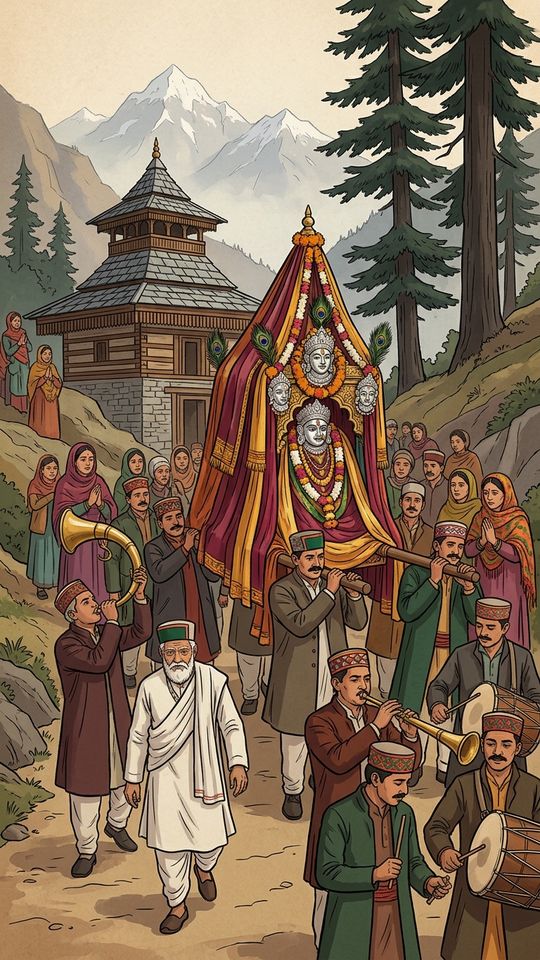
Every deity has a troupe of bajantris who play traditional instruments like the dhol, nagara, karnal and ransinga. When the deity's palanquin moves, it dances along to these tunes.
Chariots and palanquins
Deities are carried to fairs in decorated chariots or palanquins. At Kullu Dussehra about 300 deities arrive at Dhalpur ground with their palanquins — a "gathering of gods" unique in the world.
Shirgul Mahadev is believed to reside on Churdhar, the highest peak of Sirmaur. The name "Shirgul" may come from "Shri Guru".
Gods and society
In the hills, deities are not only objects of worship. They are seen as protectors, guides and judges of the village. Fairs, weddings, harvests and new beginnings all happen with the deity's blessing.
Frequently asked questions
Why is Himachal called Devbhoomi?
Most villages in Himachal have their own god or goddess and people seek their blessing on every major occasion. This deep deity tradition gives it the name Devbhoomi.
Who is a gur?
A gur is the deity's servant through whom, it is believed, the deity speaks during "khel" and answers devotees' questions.
This article is based on folk tales, temple traditions and public sources. Folk tales exist in many versions; the best-known ones are given here.