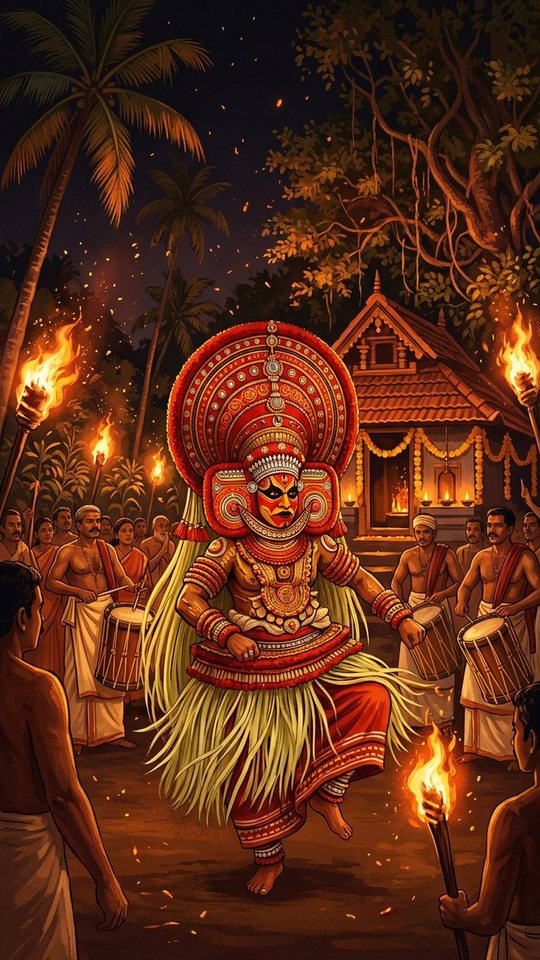
The meaning of Theyyam
"Theyyam" is believed to come from "daivam", god. It is also called Kaliyattam or Thira. During the ritual the god is believed to enter the performer’s body, so Theyyam is not seen as a dance but as a direct meeting with the divine.
More than 400 gods
There are over 400 forms of Theyyam, each with its own story, songs and make-up. Well-known forms include Raktha Chamundi, Kari Chamundi, Muchilottu Bhagavathi, Wayanad Kulavan, Gulikan and Pottan. Many Theyyams also honour old heroes and ancestral spirits.
Preparation and make-up
The performer lives with strict abstinence for about two weeks before the ritual. His face is painted for hours and a tall headdress called "mudi" is fixed on his head. With drums, conches and "thottam" songs he slowly enters the god’s presence.
Before Theyyam, for a while, everyone is equal; all take blessings from the same god.
The season: on right now
The Theyyam season begins on the 10th day of the Malayalam month of Thulam (around October) and runs until May–June. From November to May, there is a Theyyam somewhere in North Kerala’s kavus (sacred groves) and ancestral homes almost every week. Kerala Tourism publishes a Theyyam calendar each year.
Frequently asked questions
Where is Theyyam performed?
Mainly in North Malabar, Kerala (Kannur, Kasaragod), and parts of Karnataka.
When is the Theyyam season?
From October–November to May–June.
How many types of Theyyam are there?
More than 400.
This article is based on folk tales, temple traditions and public sources. Folk tales exist in many versions; the best-known ones are given here.