Hidimb and Hidimba
According to the Mahabharata, the Pandavas came to this region during their exile. It was ruled by the rakshasa Hidimb. His sister Hidimba fell for Bhima. Bhima defeated Hidimb in battle and married Hidimba.
Mother of Ghatotkacha
Bhima and Hidimba had a son, Ghatotkacha, who became a great warrior in the Kurukshetra war. About 70 metres from the temple there is a small shrine to Ghatotkacha.
From penance to goddess
The Pandavas moved on, but Hidimba stayed. She is believed to have meditated on a rock at Dhungri. The temple was built over that rock, and instead of an idol the rock itself is worshipped.
The Kullu royal family regard Hidimba as their kuldevi and "Dadi"; Kullu Dussehra does not begin without her arrival.
The temple of 1553
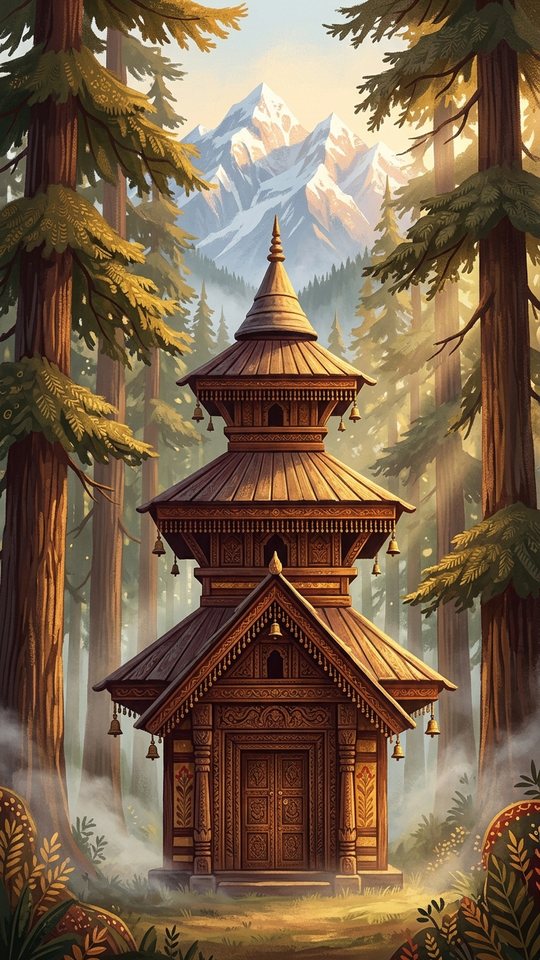
An inscription on the wooden door frame says the temple was built in 1553 CE by Raja Bahadur Singh. It is about 24 metres tall, with a three-tiered roof topped by a cone. Old horns hang on its walls.
The Dhungri fair
In May, during the Dhungri fair, village gods from around the valley are carried here in palanquins. In Manali even Navratri is celebrated in Hidimba Devi’s name.
Frequently asked questions
Who built the Hidimba Devi temple?
Raja Bahadur Singh of Kullu, in 1553 CE.
Who was Hidimba’s son?
Ghatotkacha, son of Bhima and Hidimba.
When is the Dhungri fair?
Usually in May, in spring.
This article is based on folk tales, temple traditions and public sources. Folk tales exist in many versions; the best-known ones are given here.