Kotwal of Ujjain
Tradition says Mahakal gave Kaal Bhairav the duty of guarding Ujjain. That is why he is called the "Kotwal", the city’s protector. It is believed no pilgrimage to Ujjain is complete without his permission.
The Bhairavgarh temple
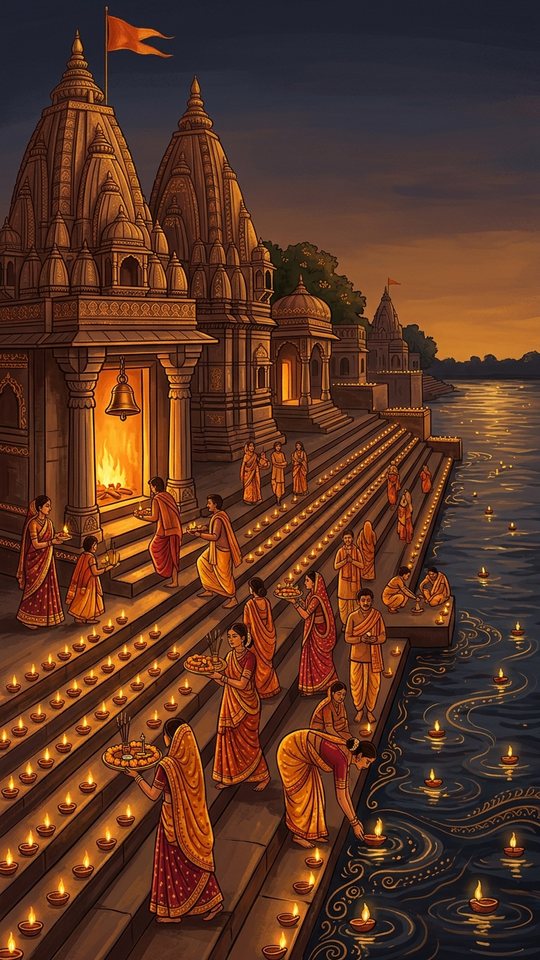
The temple stands on the Shipra river in Bhairavgarh, about 7–8 km from Ujjain station. Tradition traces it far back and links it to King Bhadrasen. Today’s temple shows Maratha style, with traces of old Malwa-style paintings on its walls.
The liquor offering
The best-known offering here is liquor. The priest holds a plate of liquor to Bhairav’s lips and tilts it slightly. Devotees watch the liquor slowly disappear. What remains is returned as prasad. Devotees also offer mawa and besan laddoos.
Miracle or mystery, thousands come every day to watch it.
The tantric tradition
The Kaal Bhairav temple is counted among Ujjain’s tantric shrines, and the liquor offering is part of that old tradition. Offering liquor is not compulsory; devotees also worship with flowers and sweets.
Frequently asked questions
Why is Kaal Bhairav called the kotwal of Ujjain?
It is believed Mahakal gave him the duty of guarding the city.
Is offering liquor compulsory?
No. It is a tradition but not required; flowers and sweets are offered too.
Where is the Kaal Bhairav temple?
Bhairavgarh, Ujjain, on the Shipra river.
This article is based on folk tales, temple traditions and public sources. Folk tales exist in many versions; the best-known ones are given here.