The terror of Kirmir
The folk tale says that at the start of Kaliyuga demons roamed the mountains. The worst was Kirmir, who devoured all seven sons of a Brahmin named Huna Bhatt and then cast an evil eye on his wife.
The four brothers appear
Huna Bhatt prayed to Shiva and Shakti. He was told that on the seventh Sunday the Mahasu brothers would come out with their army. And so they did: Botha, Pavasi, Vasik and Chalda appeared and destroyed the demon army. Chalda Mahasu drove Kirmir into a ravine of Mount Khanda; people say the sword marks are still on the rock.
The village name Hanol is also said to come from Huna Bhatt.
Chalda, the god who keeps moving
Of the four, Chalda Mahasu never stays in one place. His palanquin tours from village to village, moving to a new seat every few years.
The god’s court
Mahasu Devta is a god of justice. Disputes are settled by "lota-pani": water is filled in a vessel in Mahasu’s name and both sides drink it. It is believed the one who lies will suffer for it.
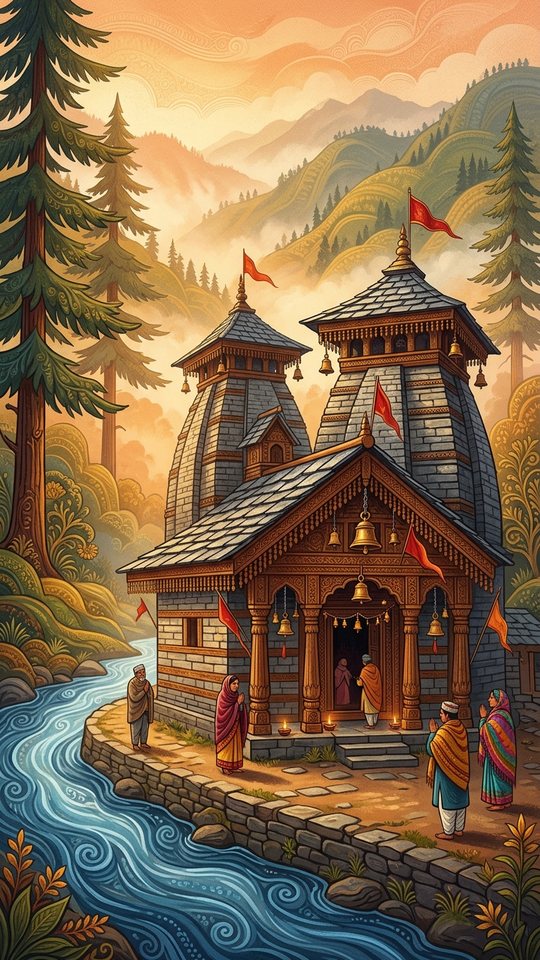
The Hanol temple
The Hanol temple is dated to the 9th century and is listed by the Archaeological Survey of India. The main shrine belongs to Botha Mahasu.
Frequently asked questions
Who is Mahasu Devta?
Four brother gods, Botha, Pavasi, Vasik and Chalda, worshipped as gods of justice in Jaunsar-Bawar and parts of Himachal.
Where is the Mahasu temple?
Hanol, Dehradun district, Uttarakhand, on the Tons river.
What is lota-pani?
A traditional oath where water is drunk in Mahasu’s name to decide who is telling the truth.
This article is based on folk tales, temple traditions and public sources. Folk tales exist in many versions; the best-known ones are given here.